How to Audit a Perfume Packaging Supplier: A 12-Point Checklist for Brand Buyers
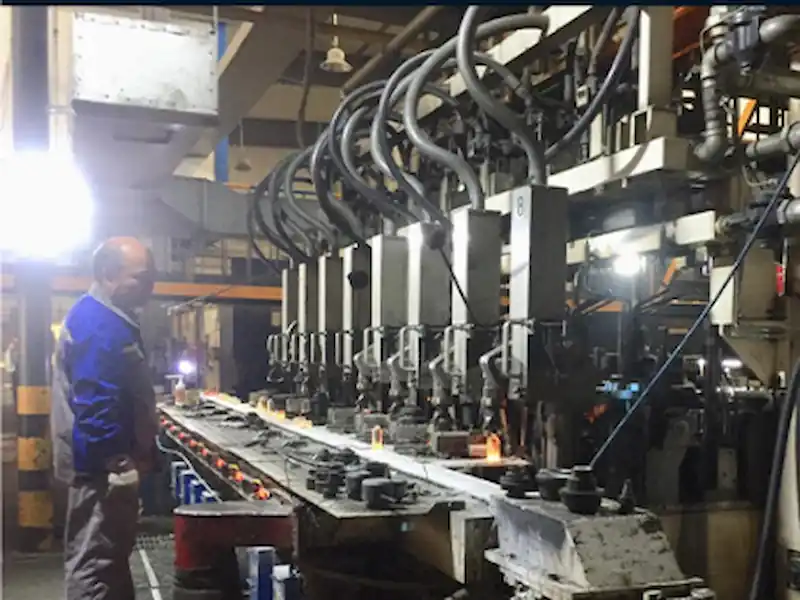
Choosing a perfume packaging supplier is one of the few sourcing decisions a fragrance brand cannot easily reverse. A box structure can be redesigned; a glass mould cannot. A late delivery can be apologised for; a batch that fails a leak test after the bottles are filled is a write-off measured in five figures. That is why larger brands audit before they order rather than after.
This checklist is written from the buyer side. It covers the twelve things worth verifying, how to tell a real factory from a trading company, the red flags that should stop a deal, and how to structure a trial order so that a first purchase is also a test. Each point is something you can ask for in writing and check without specialist equipment.
The short answer
Audit a perfume packaging supplier on four things: legal and certification (business licence, export rights, ISO 9001, FSC where paper is involved, social-compliance audit for European or US retail accounts), real production capability (own workshop, key equipment, in-house sampling), quality system (incoming inspection, first-article approval, AQL outbound checks, leak testing), and commercial reliability (capacity scheduling, lead-time honesty, payment terms). Ask for documents, request a live video walk-through, and always place a small trial order before a full run.
1. Why an audit is cheaper than a bad first order
The cost of a failed packaging order is not the packaging. It is the cascade:
- Filling-line stoppage. If bottles arrive with a neck finish that does not crimp, the filler stops and the launch date moves.
- Write-off at scale. A batch that leaks after filling destroys both the pack and the juice inside it.
- Retail chargebacks. A box that arrives scuffed or off-colour at a retail DC can trigger compliance deductions.
- Re-tooling. A glass mould cut to the wrong neck is a five-figure loss and a 90-day delay, not a reprint.
An audit costs a few days of attention. A bad first order costs a season. For a brand preparing a launch, the audit is not bureaucracy — it is the cheapest risk control available.
2. The 12-point perfume packaging supplier checklist
Group the audit into four areas. Ask for every item in writing; a supplier who has done this before will have the documents ready.
A. Legal and compliance (points 1–5)
| # | What to verify | How to check it | Why it matters |
|---|---|---|---|
| 1 | Business licence and export rights | Ask for the licence and the customs registration number; match the legal entity name to the quotation | A quotation from one entity and an invoice from another is a payment-risk signal |
| 2 | ISO 9001 quality management | Certificate number and current validity, checked with the issuing body | Shows a documented quality process exists, not just an intention |
| 3 | FSC certification (paper packaging) | FSC certificate code (format FSC-Cxxxxxx) verified in the public FSC database | Required by many European and North American retail accounts for paper |
| 4 | Social compliance audit (BSCI, SMETA/Sedex) | Audit report, grade or expiry date; confirm which facility was audited | Large brands and retailers increasingly require this before onboarding |
| 5 | Product test reports | Heavy-metal and migration test reports from a recognised lab, with the date and the tested material | Relevant where packaging contacts the product or the consumer |
B. Real production capability (points 6–9)
| # | What to verify | How to check it | Why it matters |
|---|---|---|---|
| 6 | Own workshop vs outsourcing | Ask directly which processes are in-house and which are subcontracted; request a live video walk-through | Trading companies cannot control quality or schedule at the factory that actually runs the job |
| 7 | Key equipment | Equipment list and a video of it running — printing press, die-cutter, gluing and wrapping lines, glass production | Equipment tells you what the factory can actually make and how fast |
| 8 | Incoming inspection and first-article approval | Ask to see an ICQ record and a first-article report for a current product | Most defects are inherited from incoming material, not created in production |
| 9 | In-house sampling | Ask where the pre-production sample is made and how long it takes | A factory that samples in-house finds fit problems before the run; one that outsources sampling passes them to you |
C. Quality control and testing (points 10–11)
| # | What to verify | How to check it | Why it matters |
|---|---|---|---|
| 10 | Outbound inspection standard | Ask which AQL level and inspection standard they work to, and request a sample inspection report | A stated standard is auditable; “we check everything” is not |
| 11 | Product-specific testing | For bottles: leak/vacuum test. For boxes: drop and transit test. Ask for the parameters, not just a pass | A result without the test conditions cannot be verified or repeated |
D. Commercial reliability (point 12)
| # | What to verify | How to check it | Why it matters |
|---|---|---|---|
| 12 | Capacity, lead time and communication | Ask for a written production schedule for your quantity, the name of your account contact, and their escalation path | Lead-time honesty is the single best predictor of how a supplier behaves when something goes wrong |
3. How to tell a real factory from a trading company
This is the most common source of disappointment in packaging sourcing, and it is easy to test. A trading company is not automatically a bad choice — but you should know which one you are dealing with, because it changes who controls quality, schedule and price.
| Question | A real factory typically | A trading company typically |
|---|---|---|
| “Where is the workshop?” | Gives an address you can visit or view on video, and walks you through the line live | Offers photos and says visits need scheduling through a partner |
| “Which processes are in-house?” | Names specific ones and admits which are outsourced | Describes everything as “we do”, vaguely |
| “Send a video of the line running now” | Sends it within a day, showing the actual product | Sends stock footage or a promotional clip |
| “Who makes the sample?” | In-house sample room, with a named technician or engineer | Samples arrive from an unnamed source |
| “What is your scrap or rework rate?” | Gives a number without prompting | Deflects the question |
A live video walk-through is the single most efficient test. Ask for a call at the start of their working day, ask them to pan across the floor and show a machine running with your product type on it, and ask them to hold today’s newspaper or write the date on a whiteboard in shot. It takes ten minutes and settles the question.
4. Remote audit versus on-site audit
For a first order, a structured remote audit catches most of what matters. An on-site visit adds confidence but is not always practical before a trial order.
| Remote audit covers | Only an on-site visit really covers |
|---|---|
| Document verification and certificate validity | Actual housekeeping and organisation of the floor |
| Live video walk-through of the line | Whether the narrated process matches the physical reality |
| Sample quality and fit testing | Real production speed and bottleneck behaviour |
| Written QC procedures and sample reports | Whether those procedures are followed on a normal day |
| Reference checks with existing customers | Whether the workforce looks stable and experienced |
A practical sequence for most brands: remote audit before the first sample, a small trial order before the first production run, and an on-site visit once annual volume justifies it. The trial order is the most informative stage and the least expensive way to see a supplier under real conditions.
5. Twelve red flags that should stop a deal
| Red flag | What it usually indicates |
|---|---|
| Refuses to share the business licence or the legal entity name | Payment or compliance risk |
| Declines a live video walk-through, repeatedly | No own workshop, or a floor that does not match the pitch |
| Quotes a certificate code you cannot verify | The certification does not exist or does not cover this facility |
| Sample is excellent, production is not | Sample made by hand or by a different factory |
| Price far below every other quote | Material substitution, or a hidden cost that appears later |
| Promises a lead time shorter than the materials allow | Scheduling risk; you will be the one explaining the delay |
| Insists on 100% advance payment for a first order | No willingness to share risk — negotiate staged terms or walk |
| Cannot describe which steps are outsourced | You will not know who is responsible when something fails |
| Offers no inspection report and no AQL statement | No measurable quality process |
| Answers technical questions with marketing language | No engineering capability behind the sales desk |
| Refuses any trial order below full MOQ | Inflexible process, or cannot make small runs at all |
| No export documentation experience | Delays and customs risk on your first shipment |
One red flag is a question to ask. Two is a pattern. Three is a decision.
6. How to structure a trial order
The point of a trial order is not to get packaging cheaply — it is to watch how the supplier behaves when the order is small and the attention is real. Structure it in three stages.
Stage 1 — Pre-production sample
- Order samples in the final materials, not a white mock-up. A white sample tests structure; a printed sample tests the colour, the laminate and the wrap.
- Test fit with your actual bottle or vial, not the supplier’s reference size.
- Put the sample through the condition it will actually meet — a humid room for boxes, an inverted hold for a filled bottle.
Stage 2 — Small production trial
- Place a trial at or near MOQ, with the same specification as the intended production run.
- State the acceptance criteria in writing before the order: dimensions, colour target, leak-test parameters, packing standard.
- Inspect on arrival against those criteria, and record what you find — including what was fine, not just what failed.
Stage 3 — Full run
Only after stage 1 and 2 pass. Ask for the same AQL inspection report and the same leak or transit test parameters you saw at trial, so you can confirm nothing changed when the volume went up.
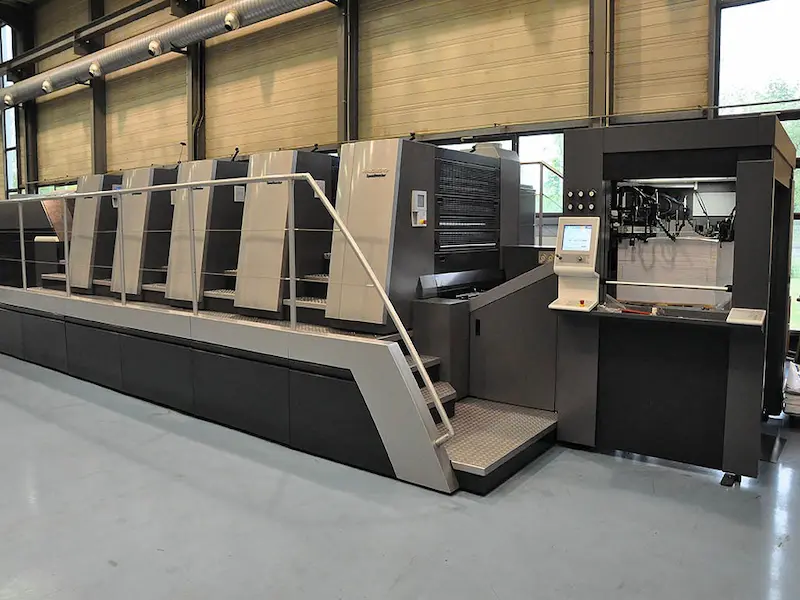
Ask which equipment actually runs your job, and ask to see it running. This is a Heidelberg press — the brand is checkable, the machine is not.
7. Scoring the audit
A simple scorecard makes the comparison objective and gives you a document to justify the decision internally. Score each item 0–2 and set a minimum before you start.
| Score | Meaning | How to treat it |
|---|---|---|
| 2 | Verified with a document or a live check | Counts fully |
| 1 | Answered verbally, not evidenced | Follow up; counts half |
| 0 | Refused, evaded, or contradicted by another answer | Treat as a red flag |
Twelve items at a maximum of 24 points gives you a comparable score across three or four candidates. In practice the useful signal is not the total — it is whether any single critical item (certificate validity, own workshop, leak testing) scored zero. A supplier who is strong everywhere but cannot evidence one critical control is a different risk from one who is mediocre everywhere.
8. What a well-run supplier hands you without being asked
The clearest signal of a mature supplier is not what they say, but what arrives in the first email. These items should be volunteered, not extracted:
- A quotation that names the material, the board weight, the finish, the tolerance and the MOQ — not just a unit price.
- Their certification list with certificate numbers, so you can verify rather than trust.
- A sample lead time and a production lead time stated separately, with the sample lead time described as a range.
- A named contact with a direct channel, and a stated response expectation.
- A packing standard for the export carton — pieces per carton, carton dimensions and gross weight.
If those five arrive unasked, the audit is largely a formality. If they have to be dragged out one at a time, the quality system probably matches the paperwork.
Once the audit is done, the next decision is commercial: how to read the numbers that come back. Our guide to comparing perfume packaging quotes line by line covers the eight line items that must match before a unit price means anything, and the five ways a lowball quote is constructed.
Frequently Asked Questions
Start with legal entity and certification: the business licence, export rights, ISO 9001, and — where paper is involved — a verifiable FSC certificate code. If those four cannot be evidenced, the rest of the audit is premature. After that, the most informative single test is a live video walk-through of the production floor.
Ask three questions: where the workshop is, which processes are in-house, and whether they will do a live video call while the line is running. A real factory gives a specific address, names the processes it outsources, and can show you a machine running the same product type. A trading company tends to describe everything as “we do” and offers photos rather than a live view.
ISO 9001 for quality management, FSC if you are buying paper packaging for retail accounts that require it, and a social-compliance audit such as BSCI or SMETA if you supply large retailers or European brands. Product-level test reports from a recognised laboratory matter where the packaging contacts the product or consumer. Always verify certificate numbers with the issuing body rather than accepting a logo.
For a first order, a remote audit with document verification, a live video walk-through, and sample testing catches most of what matters. It does not show you housekeeping, real production speed, or whether procedures are followed on an ordinary day. The most informative and least expensive step is a small trial order before a full run; an on-site visit makes sense once annual volume justifies the trip.
An excellent sample followed by a different production quality. It usually means the sample was made by hand or by a different facility, and it is the failure that costs brands the most because it passes your sampling gate. The way to catch it is to compare the trial production run against the sample using the same acceptance criteria.
At or near the stated MOQ, with the same specification as the intended production run. The purpose is to observe the supplier under small-volume conditions — how they respond to problems, whether the inspection report materialises, and whether the quality holds when attention is on a small job.
For a first order, a deposit and balance on inspection is a reasonable and common structure. A supplier who insists on 100% advance payment for a first order is asking you to carry all the risk; that is something to negotiate rather than accept. The terms matter as much as the price because they determine who absorbs the cost when something goes wrong.
Ask for the test parameters, not just a pass result — the vacuum pressure, the hold time and the pass criteria — and then ask for the same parameters on the trial order so you can confirm nothing changed. A supplier who can quote a specific pressure and hold time has a defined process; one who says “we test everything” does not.