Perfume Concentrations Explained: Parfum, EDP, EDT and EDC Compared
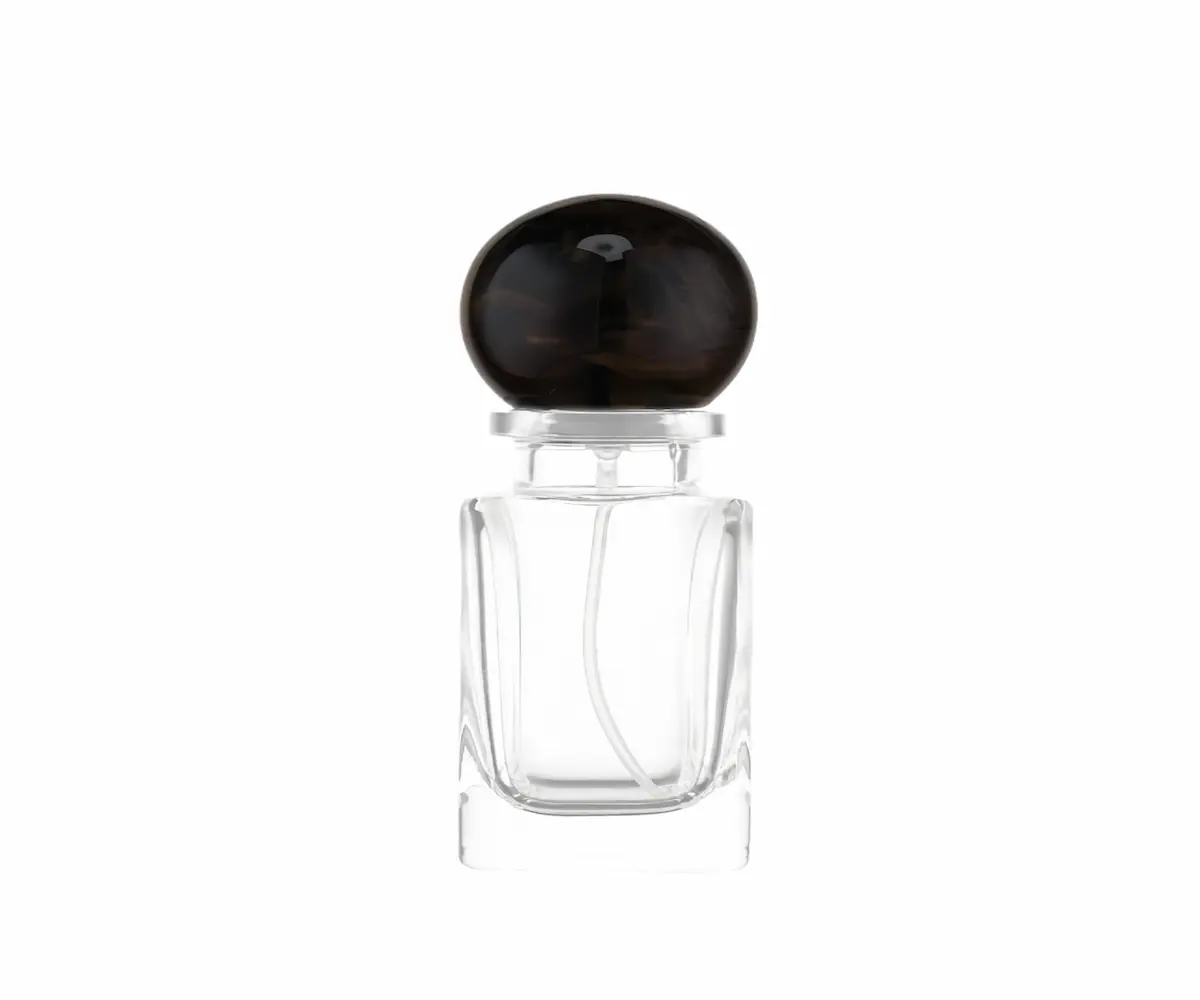
This guide sets out what each concentration actually contains, how long each typically lasts, how the four families differ in use, and — the part most guides skip — how concentration quietly drives the packaging decision: bottle capacity, glass colour, closure type and sealing requirement. It is written for both fragrance buyers and brand teams building a range.
The short answer
Concentration is the percentage of fragrance oil in the finished liquid. Parfum (Extrait) is roughly 20–40% oil and lasts 6–8 hours or more; Eau de Parfum (EDP) is around 15–20% and lasts 4–6 hours; Eau de Toilette (EDT) is roughly 5–15% and lasts 3–4 hours; Eau de Cologne (EDC) is about 2–4% and lasts 2–3 hours. Higher concentration generally means smaller volumes, darker or thicker glass for light protection, and a tighter-closing pack.
1. What “concentration” actually measures
A fragrance is a mixture of three things: the fragrance oil (the concentrate), alcohol (the solvent that carries it), and water in some formulations. Concentration is simply the proportion of fragrance oil in that mixture. Everything else — strength, longevity, sillage, price — follows from it.
Two clarifications matter, because both are widely repeated wrongly:
- Concentration is not the same as quality. A 20% EDP made from cheap materials can smell worse than a 12% EDT made from excellent ones. Concentration sets strength and wear time, not artistry.
- The percentages are conventional, not regulated. There is no universal legal standard fixing EDT at 10% or EDP at 18%. Each house works to its own convention, which is why a strong EDT from one brand can outperform a weak EDP from another.
2. The four concentration families compared
The figures below are the conventional ranges used across the industry. Treat them as bands, not fixed points — houses vary, and the label reflects the brand’s own convention.
| Family | Fragrance oil | Typical longevity | Projection | Price position |
|---|---|---|---|---|
| Parfum / Extrait de Parfum | ≈20–40% | 6–8 hours+ | Close to the skin, intense | Highest per ml |
| Eau de Parfum (EDP) | ≈15–20% | 4–6 hours | Moderate to strong | The mainstream premium tier |
| Eau de Toilette (EDT) | ≈5–15% | 3–4 hours | Lighter, more diffusive | Mid tier, often the volume seller |
| Eau de Cologne (EDC) | ≈2–4% | 2–3 hours | Fresh, immediate, short | Entry tier |
Conventional industry ranges. Individual brands differ; the label is a convention rather than a regulated specification.
A fifth label appears often enough to mention: Eau Fraîche, usually around 1–3% oil, essentially a scented water for hot climates and immediate refreshment. It behaves more like a body product than a fragrance.
One counter-intuitive consequence: a higher concentration does not always mean stronger scent in the room. Extrait sits close to the skin and radiates less, which is deliberate — it is worn for the wearer and for those who come close, not for the room. If a brand wants a fragrance that fills a space, a well-built EDT or EDP often projects more than an extrait of the same formula.
3. Which concentration for which use
Concentration choices are usually driven by three things: the occasion, the climate, and the price point the brand is targeting.
| Situation | Common choice | Reasoning |
|---|---|---|
| Evening, cold weather, occasion wear | Parfum / Extrait | Long wear, close projection, a small volume lasts a long time |
| Everyday signature scent | EDP | The balance most brands build a range around |
| Daytime, office, warm climate | EDT | Lighter, less cloying in heat, easy to reapply |
| Fresh, immediate, post-shower | EDC / Eau Fraîche | Short and bright, closer to a body product in use |
| Gift sets and discovery | EDP or EDT in 10–30 ml | Lower entry price, same scent, easy to trial |
Climate matters more than most brands account for. Heat amplifies projection and shortens perceived wear, so a formula that performs well as an EDP in a European winter can feel overwhelming as the same EDP in a tropical summer. Several houses sell the same scent in two concentrations precisely for this reason — and in those cases the two SKUs often use different bottle sizes, which brings us to packaging.
4. How concentration drives the packaging decision
This is the part most concentration guides leave out, and it is where a formulation decision becomes a purchasing decision. Concentration changes four things about the pack.
Bottle capacity
| Concentration | Typical retail volumes | Why |
|---|---|---|
| Parfum / Extrait | 15 ml, 30 ml | High cost per ml; a small volume is already a premium purchase |
| Eau de Parfum | 30 ml, 50 ml, 100 ml | The widest range — 50 ml is the usual volume driver |
| Eau de Toilette | 50 ml, 100 ml, 200 ml | Lower cost per ml supports larger formats and reapplication |
| Eau de Cologne / Eau Fraîche | 100 ml, 200 ml, 400 ml | Low concentration, high consumption per wearing |
The capacity decision is not cosmetic. A 15 ml extrait and a 200 ml cologne are different manufacturing problems: different neck finishes, different glass weights, different box structures, and different minimum order quantities. The concentration decision should be made before the bottle is specified, not after.
Glass colour and light protection
Higher concentrations are usually sold in smaller volumes and at higher unit value, which makes light protection more commercially important. Clear glass showcases the liquid — often desirable for a pale extrait — but lets UV through. Amber, frosted and coated glass reduce light exposure and are common for higher-value formulations. This is a real trade-off between shelf appeal and product stability, not a stylistic preference alone.
Closure and sealing
Alcohol content matters here. A higher-concentration fragrance is still an alcohol-based liquid, and alcohol evaporates. The seal on a 15 ml extrait that a customer keeps for two years has to hold as reliably as the seal on a 100 ml EDT that is used in months. In practice this means a properly crimped collar or a well-torqued screw closure with a compatible gasket, and a leak test that reflects the real storage life.
For the mechanics of the closure itself, the guide to perfume bottle neck finishes covers crimp and screw specifications in detail.
Box structure
A 15 ml extrait is often sold as a small, rigid, giftable box — the volume is small and the price is high, so the pack carries a disproportionate share of the value. A 200 ml cologne usually ships in a folding carton, because the volume is high and the margin does not support a hand-built rigid box. The custom perfume box range spans both ends of that spectrum.
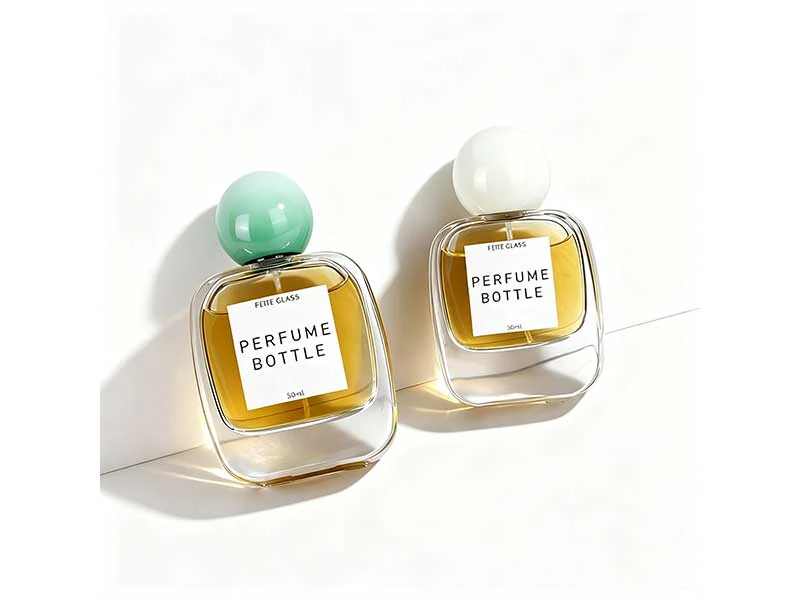
A 30 ml flacon suits both EDP and extrait — which is why the same bottle mould often serves two concentrations in one range.
5. Building a range: how brands use concentration
Most successful fragrance ranges use concentration as a tiering device rather than a single choice. Three patterns are common:
| Pattern | Structure | What it achieves |
|---|---|---|
| Ladder | Same scent as EDT → EDP → Extrait, at increasing price and decreasing volume | Multiple price points from one formula and one bottle family |
| Single-tier focus | One concentration only, usually EDP | Simpler supply chain, clearer brand positioning |
| Occasion split | EDT for day and travel, EDP or Extrait for evening | Two SKUs with genuinely different use cases |
The ladder is the most common because it is the most efficient: one fragrance formula, one bottle family in two or three sizes, three price points. It is also the pattern that most rewards early packaging planning — if the bottle family is chosen before the concentration ladder is fixed, adding a tier later usually means a new mould.
6. Four myths about concentration
| Myth | Reality |
|---|---|
| “EDP is always better than EDT” | They are different products for different uses. An EDT built for warm weather is often the better purchase; a weak EDP is worth less than a good EDT. |
| “Higher concentration means longer projection” | Extrait usually projects less and lasts longer on skin. Projection and longevity are separate properties driven by different materials. |
| “The percentage is regulated” | It is a trade convention. Two 18% EDPs from different houses can perform very differently depending on the materials and the alcohol. |
| “Concentration explains the price” | It explains part of the cost of goods. Packaging, distribution, marketing and brand positioning usually explain more of the retail price than the oil percentage does. |
The last one matters for brands budgeting a launch: it is easy to over-invest in a high oil percentage and under-invest in the pack that the customer actually handles. A well-made 12% EDT in good packaging usually outperforms a 20% formula in a cheap bottle.
Frequently Asked Questions
Parfum (Extrait) contains roughly 20–40% fragrance oil and typically lasts 6–8 hours or more, projecting close to the skin. Eau de Parfum contains about 15–20% oil and lasts 4–6 hours with more diffusion. Parfum is normally sold in smaller volumes (15–30 ml) because of its higher cost per millilitre.
On average yes, and it lasts longer — EDP is roughly 15–20% oil against EDT’s 5–15%. But strength depends on materials and formulation as much as percentage, so a well-built EDT can outperform a weak EDP. For warm climates and daytime wear, an EDT is often the better choice regardless of strength.
Conventional expectations are: Parfum 6–8 hours or more, EDP 4–6 hours, EDT 3–4 hours, EDC 2–3 hours. Skin type, humidity and temperature move these figures significantly — a fragrance that lasts six hours in a cold climate may fade in three on a humid day.
No. There is no universal legal standard fixing EDT at a particular percentage or EDP at another. The figures are industry convention, and each fragrance house works to its own range. This is why the label is a useful guide to positioning but not a measurable specification.
Not necessarily, and often the opposite. Extrait is designed to sit close to the skin and radiate less while lasting longer. Projection is driven by the specific aroma materials and their volatility, not by the oil percentage alone. A well-built EDT frequently fills a room more than an extrait of the same formula.
Typical conventions: 15–30 ml for parfum and extrait, 30–100 ml for EDP (50 ml is the volume driver), 50–200 ml for EDT, and 100–400 ml for cologne and eau fraîche. These are driven by cost per millilitre and consumption per wearing — high concentration means a small bottle is already a premium purchase.
Yes, in four ways: capacity (higher concentration tends to smaller volumes), glass colour and light protection (higher-value formulations are more often sold in amber, frosted or coated glass), closure and sealing (alcohol evaporates, so a long-stored extrait needs a reliable crimp or screw seal), and box structure (small volumes justify rigid gift boxes; large cologne volumes usually ship in folding cartons).
Most independent brands launch with Eau de Parfum. It is the mainstream premium tier, it supports the widest range of bottle sizes, and it is what customers expect at a mid-to-premium price. An EDT can be a better choice for warm-climate markets or a lower price point; an extrait is usually a second-tier addition rather than a launch format.