How to Customize Paper Boxes for Your Perfume Brand
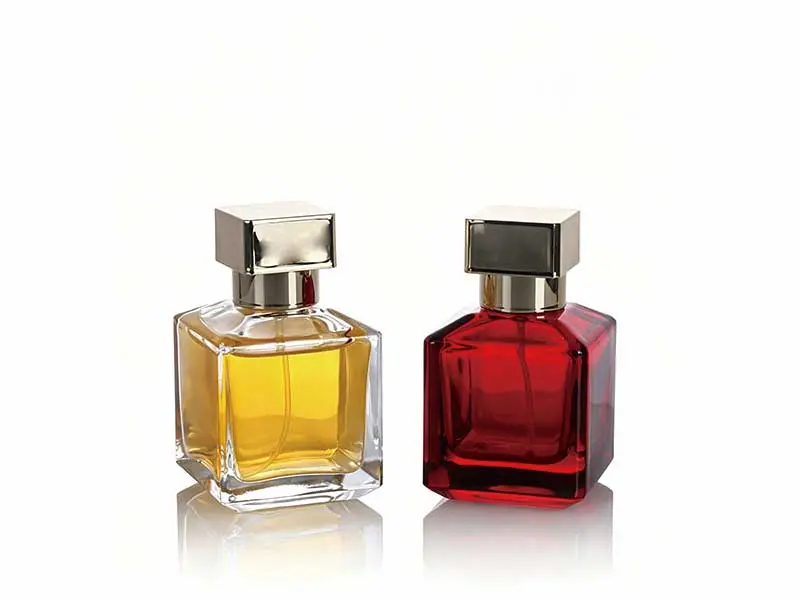
Your perfume bottle may be the star of the show, but the paper box it comes in is the first thing your customer touches. In the fragrance world, packaging is not just a container — it’s part of the experience. A custom paper box can elevate your brand, communicate your story, and protect your product during shipping. But how do you actually go about creating one? This guide walks you through every step, from choosing the right structure to finishing touches that make your box feel truly premium.
Whether you’re launching your first small-batch fragrance or scaling an established label, understanding the customization process will help you work confidently with suppliers and get exactly what you envision.
1. Why custom paper boxes matter for perfume brands
Perfume is a product people buy with their eyes closed. The unboxing moment is often shared on social media, and the box itself can make or break the first impression. A well-designed custom box signals that your fragrance is worth its price tag. It also serves practical purposes: protecting the bottle from impact, providing space for legally required information, and creating a consistent brand image across your product line.
Investing in custom packaging is no longer optional for serious perfume brands. It’s one of the most effective ways to build recognition and justify a premium price point.
💡 Did you know?
A beautifully crafted box can increase perceived value by up to 40%. Many customers keep the box long after the perfume is finished, using it as a keepsake or decorative item.
2. Step 1: Determine the box structure and size
Before thinking about colors or logos, you need to nail down the physical shape of the box. The structure must fit your bottle precisely, allow easy opening, and match your brand personality.
Common perfume box structures
- Straight tuck end (STE) boxes — The most affordable and widely used. The top and bottom flaps tuck in from the same direction. Great for standard rectangular bottles.
- Reverse tuck end (RTE) boxes — Similar to STE but the top and bottom flaps open in opposite directions. Offers a slightly more refined look.
- Rigid boxes (two-piece) — A separate lid and base, usually made from thick chipboard wrapped in decorative paper. These feel heavy and luxurious, often used for high-end or gift-set perfumes.
- Drawer/slide boxes — The bottle slides out like a drawer, creating a memorable reveal. Ideal for premium collections and travel sets.
- Foldable boxes with magnetic closure — A sophisticated option with a magnetic flap that snaps shut. Provides a satisfying closing experience and a modern look.
Work with your bottle supplier to get the exact dimensions of the bottle (including the cap and pump). Then add 3–5mm of cushion on each side inside the box to prevent rattling during transport. A snug fit looks more premium than a loose one.
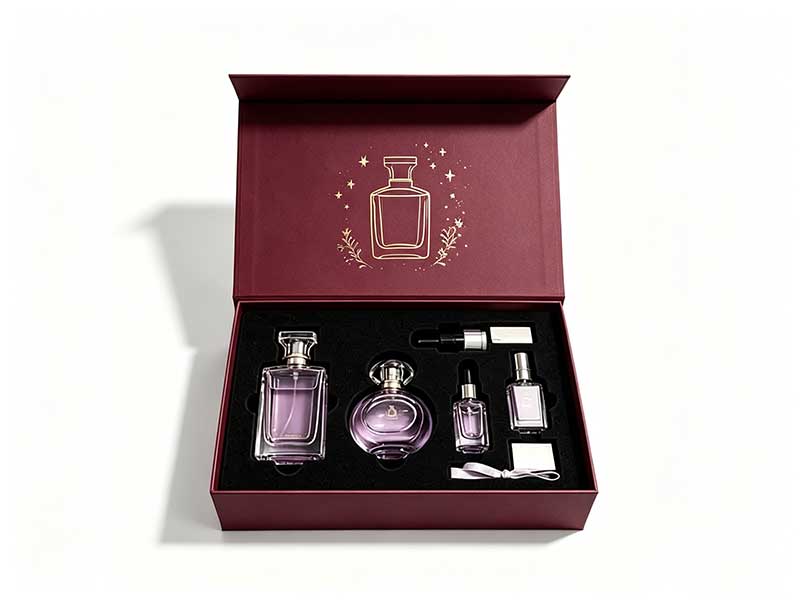
▲ From simple tuck-end boxes to luxurious rigid styles, structure sets the tone for the entire unboxing experience
3. Step 2: Select the right paper material
The paper you choose affects both the look and durability of the box. Most custom perfume boxes are made from one of the following materials:
- White cardboard (folding box board, FBB) — The standard choice for most folding cartons. It has a smooth, bright surface that’s perfect for printing and coating. Thickness typically ranges from 300 to 400 gsm.
- Kraft paper — A natural, eco-friendly option with a rustic, organic feel. Works well for botanical or niche fragrances that emphasize sustainability.
- Specialty papers — Textured, metallic, or pearlescent papers can add an immediate tactile luxury. These are often used as wrapping for rigid boxes or as the outer layer of folding cartons.
- Chipboard (greyboard) — Used as the core for rigid boxes. It’s thick and sturdy, giving the box a heavy, premium hand-feel.
For most perfume brands, a 350 gsm white cardboard with a soft-touch lamination is the sweet spot between cost and perceived quality.
4. Step 3: Add printing and finishing touches
This is where your box truly becomes your own. The combination of printing technique and special finishes can transform a plain carton into a piece of art.
Printing methods
- Offset printing (CMYK) — The most common method for detailed, full-color designs. Ideal for photographic imagery and complex patterns.
- Pantone spot colors — Used when exact brand colors are required. Slightly more expensive but ensures consistency across batches.
- Digital printing — Best for very small runs (under 500 pieces). More expensive per unit but requires no printing plates, making it suitable for prototypes and limited editions.
Finishing options that add luxury
- Foil stamping (gold, silver, copper) — Adds a metallic shine that catches the light. Perfect for logos, borders, or elegant typography.
- Embossing / debossing — Creates a raised or recessed texture. Even without ink, embossed designs look incredibly refined.
- Soft-touch lamination — Gives the box a velvety, matte surface that feels amazing in the hand. It also resists fingerprints and scratches.
- Spot UV — A high-gloss coating applied only to specific areas, creating contrast between matte and shiny sections.
- Window patching — Allows a peek at the bottle inside, which can be a powerful selling tool.
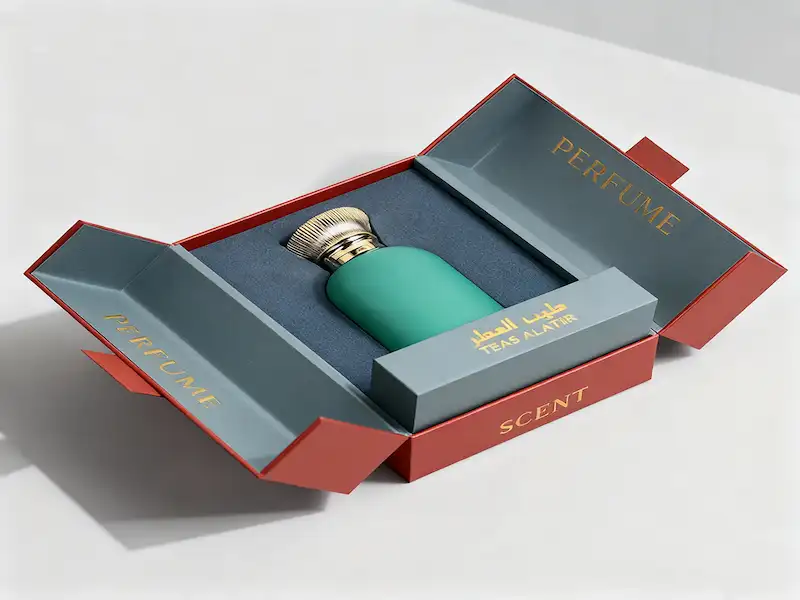
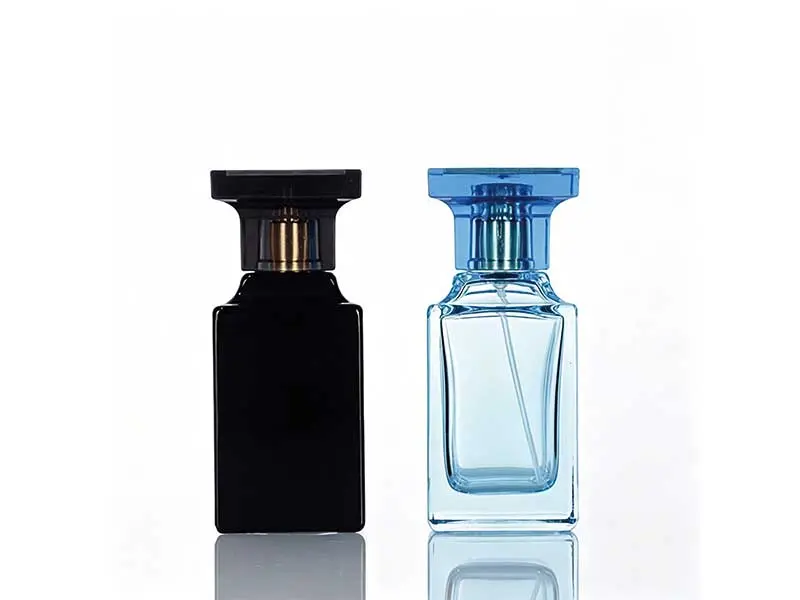
▲ Left: Foil stamping and embossing create visual depth | Right: Soft-touch lamination gives a premium matte feel
5. Step 4: Design with intention
Your box design should work as hard as the product inside. Here are a few practical considerations to keep in mind while working with a graphic designer.
- Keep essential information legible — Fragrance name, brand name, volume (in ml and oz), alcohol content, and manufacturer information are often legally required. Place them on the back or bottom panel where they won’t interrupt the visual flow.
- Use negative space wisely — Luxury packaging often relies on simplicity. A minimal design with a single focal point can feel much more exclusive than a busy pattern.
- Match the bottle’s color story — If your perfume liquid is amber, consider warm earth tones for the box. If the bottle is frosted white, a clean monochrome palette works beautifully.
- Think about the shelf — When displayed next to competitors, does your box stand out from a distance? Bold color blocking or an unusual die-cut shape can help.
6. Step 5: Request a physical sample before mass production
Never approve a design based solely on digital proofs. Colors can shift during printing, paper textures differ from screen previews, and the actual size always feels different in your hand. A physical sample — even a simple one — gives you the chance to catch problems before they multiply into thousands of boxes.
At YiZhou Packaging, we always recommend a pre-production sample (often called a “white sample” or “proof”) before the full run. For rigid boxes with complex finishes, a fully finished sample is worth the extra cost and time. The sample stage is where you verify the fit of the bottle, the alignment of the artwork, and the overall tactile experience.
⚠️ Don’t skip this step
A $50 sample can save you from a $5,000 printing mistake. Always request a physical proof and inspect it under natural light.
7. How much does custom perfume packaging cost?
Cost depends on quantity, materials, printing complexity, and finishes. As a rough guide, here’s what you can expect for a standard 30ml folding carton with CMYK printing and soft-touch lamination:
| Quantity | Estimated cost per box | Typical supplier type |
|---|---|---|
| 100–500 pcs | $1.20 – $2.50 | Local printer or digital |
| 500–2,000 pcs | $0.60 – $1.20 | Domestic manufacturer |
| 2,000–10,000 pcs | $0.25 – $0.60 | Overseas factory (e.g., YiZhou Packaging) |
| 10,000+ pcs | $0.15 – $0.35 | Overseas factory with volume discount |
*Prices include standard folding carton with 4-color printing and soft-touch finish. Rigid boxes and extra finishes will cost more.
8. Choosing the right packaging supplier
Your packaging partner should understand the unique demands of the fragrance industry. At YiZhou Packaging, we specialize in both glass bottles and paper boxes, which means we can ensure a perfect match between the bottle dimensions and the box structure. We offer complete in-house services including structural design, printing, foil stamping, embossing, and quality control.
When choosing a supplier, ask about their experience with perfume packaging, their minimum order quantity (MOQ), sample lead times, and whether they offer design support. A good supplier should be a collaborative partner, not just an order taker.
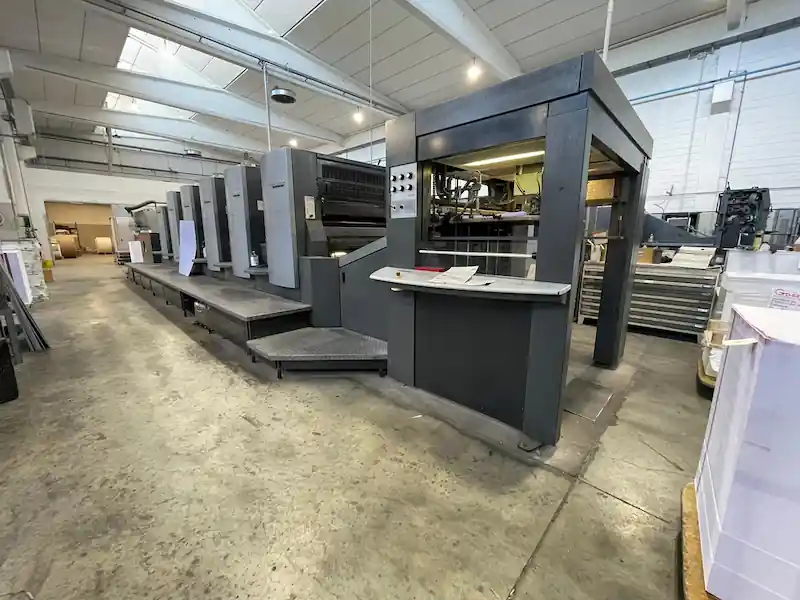
▲ Experienced suppliers carry out rigorous quality checks on every batch of custom perfume boxes
9. Your custom box checklist
Before you place an order, run through this quick checklist to make sure you haven’t missed anything:
- Bottle dimensions confirmed (with cap and pump)
- Box structure selected (tuck-end, rigid, drawer, magnetic)
- Paper material and thickness chosen
- Printing method (offset, Pantone, digital) confirmed
- Special finishes (foil, emboss, soft-touch, UV) specified
- Legally required text placed correctly
- Physical sample approved
- MOQ and lead time agreed with supplier
- Shipping and logistics planned
10. Frequently asked questions
What is the minimum order quantity for custom perfume boxes?
▼
It varies by supplier. For folding cartons, MOQs are often around 500–1,000 pieces. Rigid boxes may have a lower MOQ of 300–500 pieces. Digital printing allows even smaller runs, but the unit cost will be higher.
How long does it take to produce custom perfume boxes?
▼
After artwork approval, production typically takes 10–20 business days for folding cartons and 15–25 days for rigid boxes with special finishes. Shipping time is additional.
Can you match a specific brand color on the box?
▼
Yes. Pantone spot colors can be used to achieve exact brand color matching. This is especially important for consistent branding across multiple products and future orders.
Are paper boxes suitable for shipping perfume internationally?
▼
Yes, but you need proper internal cushioning. The box should be designed with enough padding to protect the glass bottle from impact. For air or sea freight, additional outer cartons with dividers are recommended.
Does YiZhou Packaging provide design support for the box artwork?
▼
Absolutely. Our in-house design team can help with structural drawings, 3D mockups, and print-ready artwork. We guide you from concept to final production.