How Perfume Packaging Supports Marketing and Conversion
Use custom boxes, inserts, finishes and discovery sets to turn fragrance packaging into a stronger brand and sales asset.
Perfume packaging works best as a marketing asset when it makes the brand promise visible before the customer sprays the fragrance. A well-planned package can communicate positioning, improve shelf recognition, create a memorable unboxing moment, support discovery and gifting, and give product photography a more distinctive visual subject.
Fragrance marketing is often discussed in terms of scent, storytelling, campaigns and influencers. Yet the box is one of the few marketing elements customers can hold, photograph, open and remember. For a perfume brand, packaging connects the invisible product experience with a physical signal of quality. The goal is not to add decoration for its own sake. The goal is to design a packaging system that attracts the right customer, supports the price position and makes the next action—purchase, gift, trial or enquiry—easier.
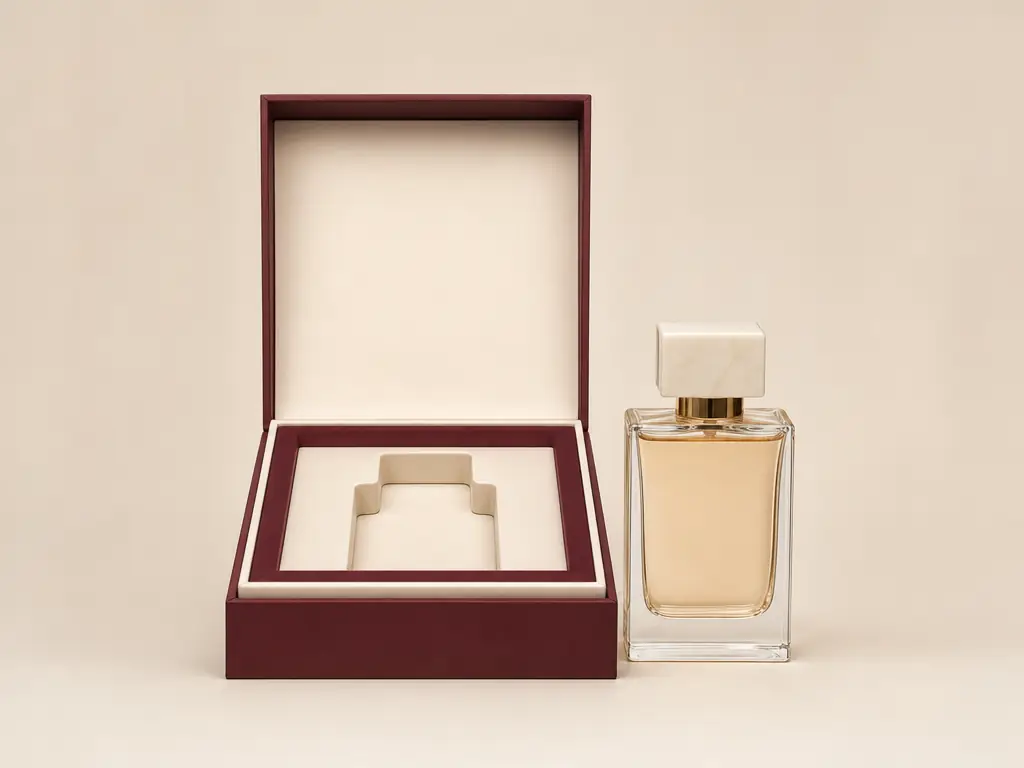
A coordinated perfume box and bottle can make the brand promise visible before the fragrance is opened.
1. Turn brand positioning into a physical signal
Luxury, natural, modern, artisanal and accessible are not only words in a brand brief. Customers read them through proportion, colour, paper, texture and the way the box opens. A heavy rigid box can suggest permanence and ceremony. A clean folding carton can support a modern collection that needs efficient retail handling. A tactile uncoated paper may reinforce a natural story, while restrained foil can make a signature mark easier to recognise.
The important point is consistency. If the bottle looks refined but the outer box feels generic, the customer receives mixed signals. If every scent uses unrelated colours and structures, the collection becomes harder to remember. Start by defining the role of the packaging: should it justify a premium price, make a gift feel complete, help a new brand look credible or create a recognisable family across several fragrances?
Build a repeatable visual system
A repeatable system does not require every box to look identical. Keep the architecture consistent—such as the logo position, box proportions, insert logic or information hierarchy—then use colour, pattern or small finish changes to distinguish each fragrance. This makes the range easier to photograph, merchandise and expand.
2. Improve shelf recognition with structure and proportion
On a crowded shelf or product grid, the packaging silhouette can be as important as the artwork. A bottle with a distinctive cap may need a box with enough internal height and a clear opening frame. A short, wide bottle may look stronger in a lid-and-base format than in a tall carton. A discovery set needs a composition that communicates the relationship between the main bottle, samples and supporting card at a glance.
Structure also affects how the product is handled. Magnetic rigid boxes create a deliberate opening motion. Drawer boxes create a reveal. Folding cartons can make a collection easier to stack and display. YiZhou Packaging’s custom box range can be compared with magnetic boxes and drawer boxes when choosing a format that matches the brand story.
Before finalising the artwork, sample the physical structure with the real bottle. A visually strong concept still has to close cleanly, protect the glass and keep the product centred during shipping.
3. Use packaging to reduce purchase hesitation
Packaging does not replace product reviews, photography or fragrance education, but it can remove uncertainty. A clear hierarchy can show the scent name, size, collection and key information without forcing the customer to search. A fitted insert can signal that the product is protected. A refined finish can support the price point. A sample card or discovery vial can make the first purchase feel more approachable.
For e-commerce, the package also becomes part of the product image. Customers may see the box before they see the bottle in detail. A clean front panel, a recognisable side profile and a well-composed open-box photograph give the brand more visual material for product pages, social posts and campaign creative. The outer box should therefore work both closed and open.
- Can the customer identify the fragrance and collection quickly?
- Does the box look credible beside competing products?
- Does the opening sequence explain what the customer receives?
- Will the package photograph clearly at retail and online?
- Does the insert make the bottle feel protected rather than overpacked?
4. Make sampling and discovery easier to market
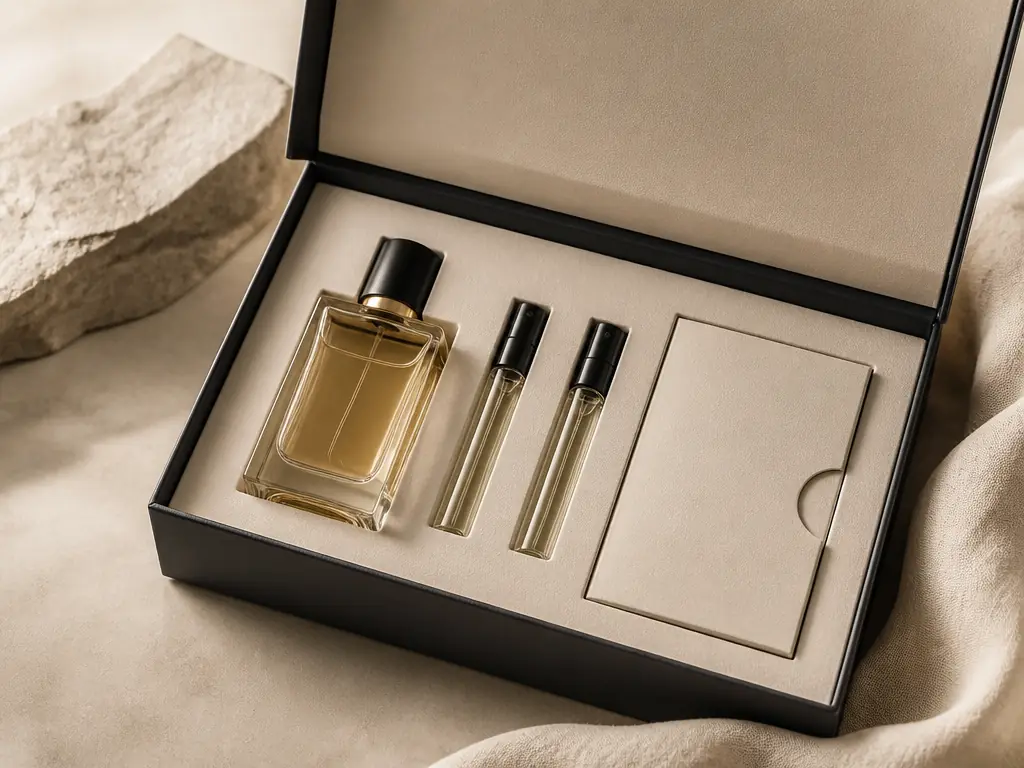
Discovery sets give fragrance brands a useful bridge between awareness and a full-size purchase. The package can present one main bottle with sample vials, or organise several scents as a collection. The insert should keep every item visible and stable, while the information card should help the customer understand how to compare the fragrances.
From a marketing perspective, a discovery set creates more moments to share. It can be positioned as a first purchase, a travel option, a gift or a way to explore a collection. The packaging should make that purpose obvious without relying on excessive copy. A considered tray, consistent sample labels and a small opening ritual can make the product feel more valuable and easier to recommend.
A discovery set can turn sampling into a clear, giftable and shareable fragrance experience.
5. Choose finishes that support the campaign message
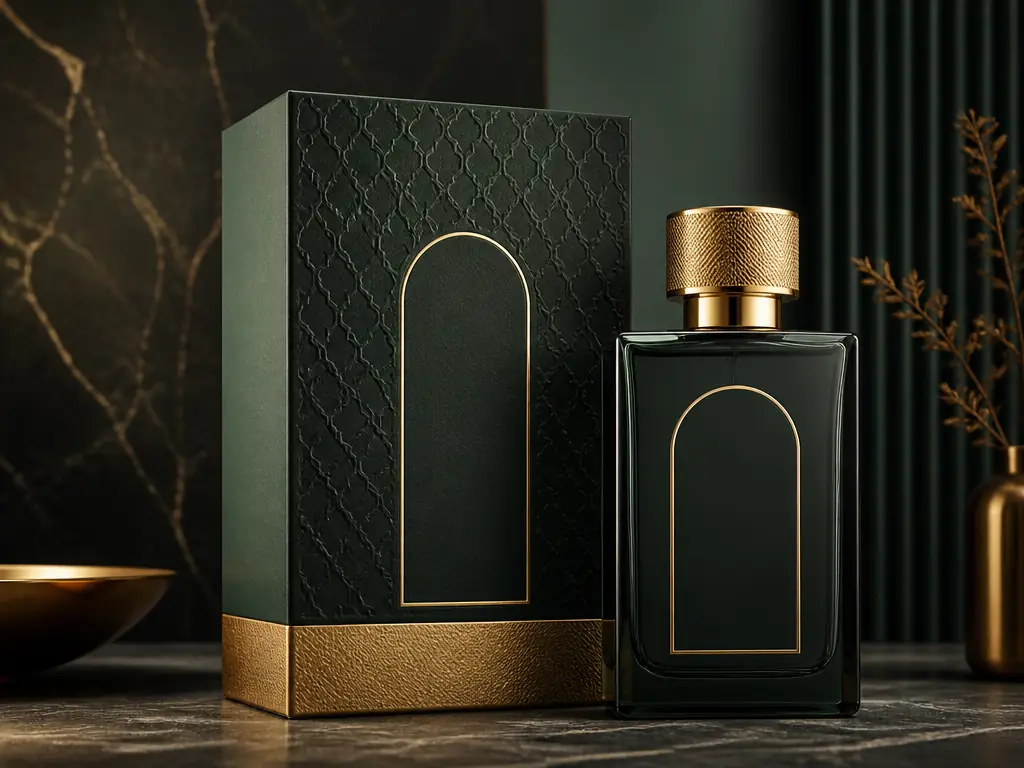
Finishes are most effective when they reinforce the message the brand is already trying to communicate. Embossing can make a monogram or pattern tactile. Foil can create a focal point for a name or emblem. Matte lamination can create a quiet, contemporary surface, while textured paper can give a botanical or artisanal collection more material character.
Use a priority order rather than adding every effect. Decide what a customer should notice first, then select the paper and finish that make that detail work. Test thin lines, small type, colour coverage and foil areas on the intended material. A finish that looks elegant on a screen may become too strong, too reflective or difficult to reproduce at scale.
A restrained embossed pattern and foil accent can give a fragrance package a recognisable campaign signature.
For a coordinated product system, review custom boxes and bottles so the bottle, cap and package support the same visual direction.
6. Design for gifting, unboxing and retention
Gifting changes the marketing job of the package. The buyer wants confidence that the product will look complete when handed over, while the recipient wants an opening moment that feels intentional. A rigid box, clean insert and well-placed information card can help the package feel ready to give without requiring extra wrapping.
Unboxing also creates content. When the lid, bottle, sample and card appear in a logical sequence, customers are more likely to photograph the product and share it. The experience should still be practical: the bottle must be easy to remove, the insert must not shed or damage the product, and the box must survive delivery. Packaging that creates a beautiful first impression but arrives crushed works against the campaign.
7. Choose a perfume packaging manufacturer that supports marketing goals
A packaging manufacturer should be able to discuss more than printing. Ask how the team will develop the structure, test the insert, match the bottle dimensions, sample the finish and repeat the result across future orders. The right partner can translate a creative direction into a manufacturable package and flag risks before they affect the launch schedule.
When comparing suppliers, prepare the bottle dimensions, quantity by SKU, target market, preferred box direction, insert requirements, artwork status and campaign timing. YiZhou Packaging’s manufacturing and engineering capabilities can help brands evaluate the production side of a marketing-led packaging brief. If the brand already has an approved bottle, share the final sample early; if not, coordinated fully custom boxes and bottles may simplify the development process.
Use sampling as part of campaign planning
Request a structural sample before approving bulk production, then review a printed or finished sample when colour, foil, embossing or texture is central to the campaign. Photograph the approved sample under the same type of light that will be used for product content. This gives the creative and production teams one physical reference instead of separate assumptions.
8. Build a marketing-led packaging brief
A strong brief connects the customer and the conversion goal to the physical package. State who the fragrance is for, what the brand should feel like, where the package will be sold and what action you want after the first interaction. The action might be a purchase, a sample request, a gift purchase, a repeat order or a wholesale enquiry.
- Define the customer, positioning and campaign message.
- Record bottle dimensions, weight, cap and product quantity.
- Choose the box structure and insert around the sales channel.
- Select one or two finishes that make the brand recognisable.
- Plan closed-box and open-box photography.
- Sample, test, approve and keep the reference package for reorders.
For a practical starting point, compare custom boxes, glass perfume bottles and related luxury perfume packaging ideas before sending the brief.
Turn Your Fragrance Story Into a Custom Package
Share your bottle details, brand direction, target quantity and campaign goal. YiZhou Packaging can help evaluate box structures, inserts, finishes and coordinated packaging options.
Start Your Packaging Discussion →Frequently asked questions
How does perfume packaging support marketing?
Perfume packaging turns brand positioning into a physical experience through colour, structure, materials, inserts, finishes and opening sequence. It can improve recognition, gifting appeal and confidence at the point of purchase.
What packaging is best for a luxury perfume brand?
Magnetic rigid boxes, premium folding cartons, drawer boxes and coordinated box-and-bottle systems can all work. The right choice depends on the bottle, channel, quantity, target price and desired brand experience.
Can perfume packaging improve e-commerce conversion?
It can support conversion by protecting the bottle in transit, making the unboxing shareable, communicating value in product photography and presenting samples or gift elements in a clear sequence.
How should a perfume brand package discovery sets?
Use a fitted insert with clear positions for the full-size bottle, samples and information card. The opening sequence should make comparison and trial easy without allowing the products to move during delivery.
What should I include in a perfume packaging marketing brief?
Include the target customer, brand position, bottle details, sales channels, campaign purpose, quantity, box structure, insert, finishes, photography needs and the action you want the customer to take next.