Custom Perfume Packaging Design: How to Choose Boxes, Inserts and Finishes
A practical framework for turning a perfume bottle into a protected, memorable and manufacturable packaging system.
The most effective custom perfume packaging starts with the bottle, not a stock box. Measure the bottle and cap, define the retail or gifting experience, then select a structure, insert and finish that can be sampled with the real product. This approach gives fragrance brands better control over protection, shelf recognition, unboxing and future product-line expansion.
For a new fragrance launch, the package is part of the product promise. The box may need to protect heavy glass, present a sculptural cap, hold a sample card, support a gift set or coordinate with several scent variants. The right design balances visual character with production reality, so the final package looks premium without becoming difficult to quote, sample or reorder.
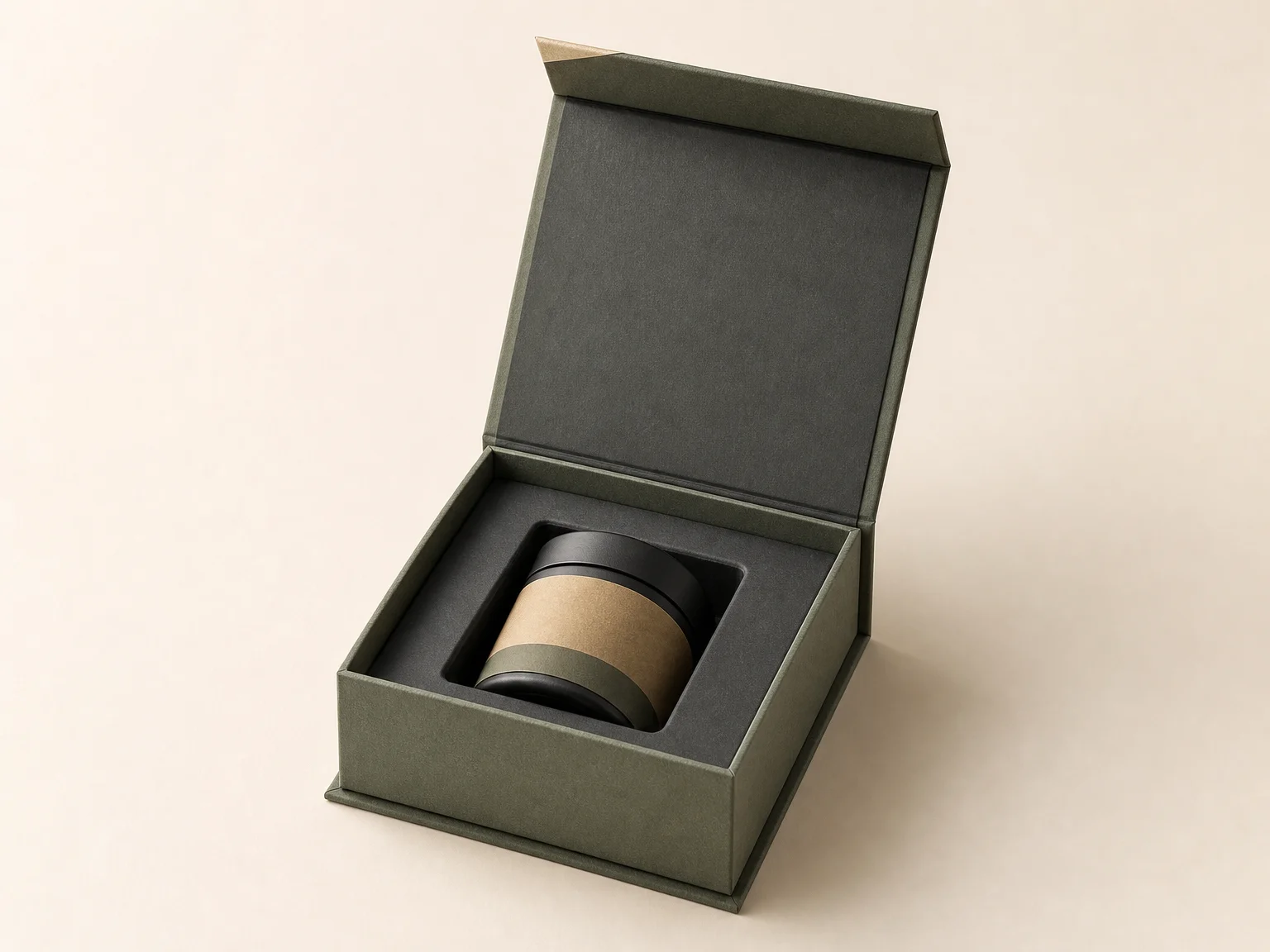
A magnetic rigid box can turn a perfume bottle into a structured premium opening experience.
1. Start with the bottle and the packaging brief
Before choosing colours or finishing, record the bottle length, width, height, cap height, weight and centre of gravity. Include the collar, pump, label and any protruding detail that affects the cavity. A 50ml bottle with a broad base may need a completely different insert from a taller, narrow bottle with a heavy cap.
Next, define how the fragrance will be sold. A boutique gift launch may justify a rigid magnetic box, while a larger retail range may benefit from a lighter folding carton that stores and ships efficiently. A discovery set may need several cavities, a scent card and a clear opening sequence. The packaging brief should connect these commercial goals to the physical product.
- Bottle drawings, dimensions, photos or a physical sample
- Quantity by fragrance, size or SKU
- Retail, e-commerce, gifting or sampling channel
- Preferred opening style and target presentation level
- Insert, material, finish, packing and shipping requirements
2. Choose a box structure that fits the launch
Magnetic rigid boxes for premium presentation
A magnetic rigid box gives a bottle a substantial frame and a controlled opening motion. It works well for signature fragrances, limited editions and gift-ready products. The board thickness, magnetic strength and inner insert should be evaluated together. The lid should close cleanly without pressing against the cap, while the insert should make the bottle easy to lift.
Folding cartons for scalable fragrance ranges
Folding cartons are useful when the brand needs several variants, efficient storage or a lighter retail package. A repeatable dieline can support a collection while allowing each scent to use its own colour or artwork. The carton still needs a reliable internal fit, particularly around the bottle shoulder and cap.
Drawer and lid-and-base boxes for discovery sets
Drawer boxes create a gradual reveal and can hold a bottle, sample vial or scent card. Lid-and-base boxes offer a stable architectural presentation for wider bottles and sets. Both formats benefit from a physical sample because tray friction, lid clearance and insert pressure are difficult to judge from a digital rendering alone.
Explore YiZhou Packaging’s custom boxes when comparing structures, or review the magnetic box and drawer box directions.
3. Design the insert around the real bottle
The insert is where appearance becomes protection. It should reduce movement, keep the bottle centred and protect the cap, neck and glass from contact with the outer box. Paperboard, die-cut card, moulded pulp, sponge and EVA can each suit different product weights, shipping routes and presentation goals.
For an unusual bottle, support the areas that carry the weight without applying pressure to fragile shoulders or decorative parts. For a gift set, organise the bottle and accessories so each item has a clear position. A spacious box is not automatically a premium box; unused space can allow movement and make the product feel less intentional.
Ask the supplier to sample the insert with the actual bottle or a reliable technical drawing. This is also the right stage to test removal: the customer should be able to lift the bottle without pulling against the cap or damaging the insert.
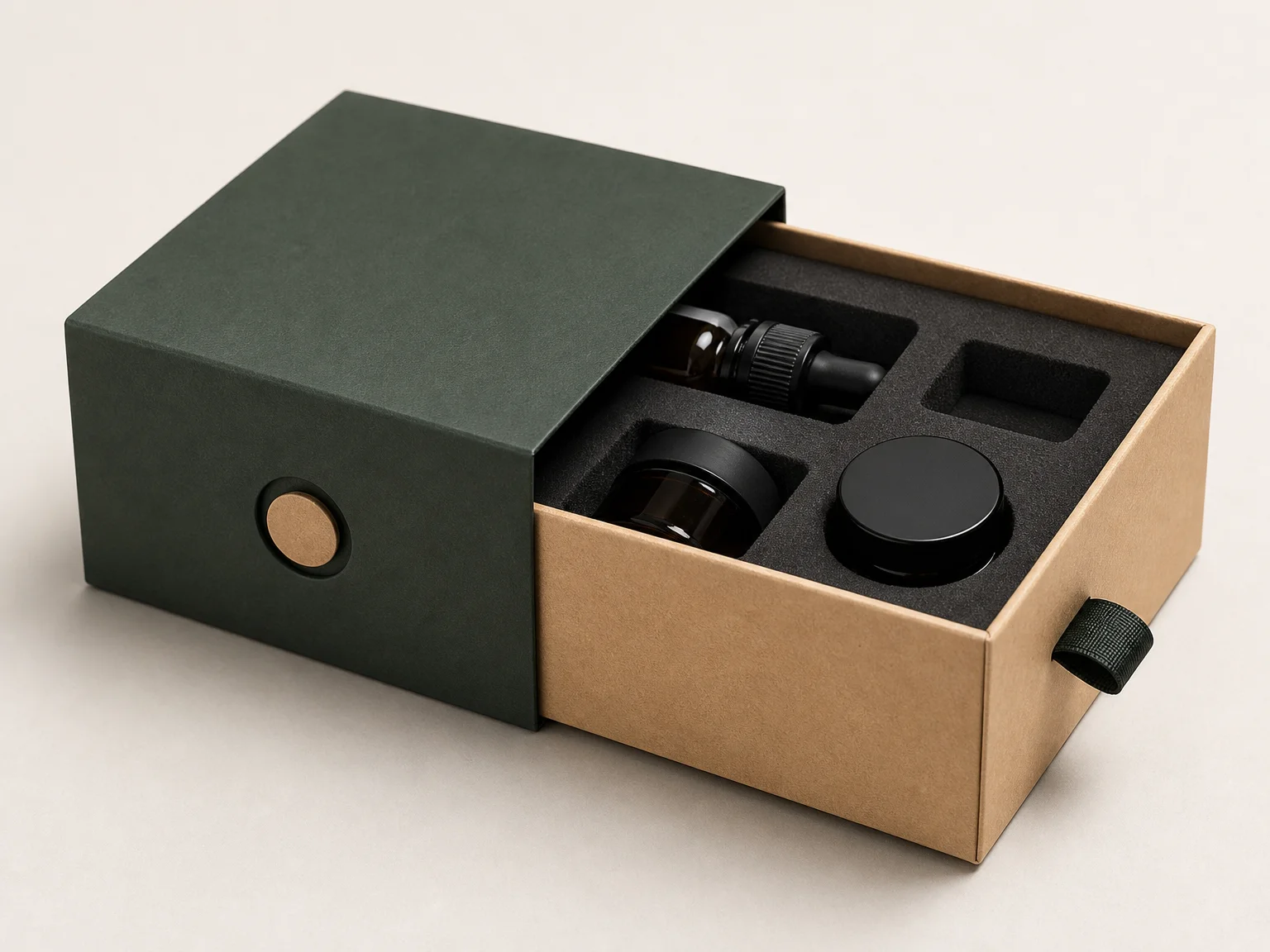
A fitted insert should protect the bottle while keeping the presentation clear and easy to handle.
4. Select finishes that strengthen the fragrance identity
Luxury perfume packaging does not need every available effect. Matte lamination can create a quiet, modern surface; textured paper can support a natural or artisanal story; soft-touch treatment can add a smooth hand-feel; and foil or embossing can highlight a name, emblem or small pattern.
Choose the finish around the artwork and paper rather than adding decoration at the end. Fine lines, small type and large foil areas all need sampling. The same colour can look different on coated and uncoated stock, and a finish that appears subtle on screen may dominate the physical box. Test the full scent family together if the brand will launch multiple variants.
For coordinated sourcing, compare custom boxes and bottles so the bottle, cap and box proportions can be reviewed as one system.
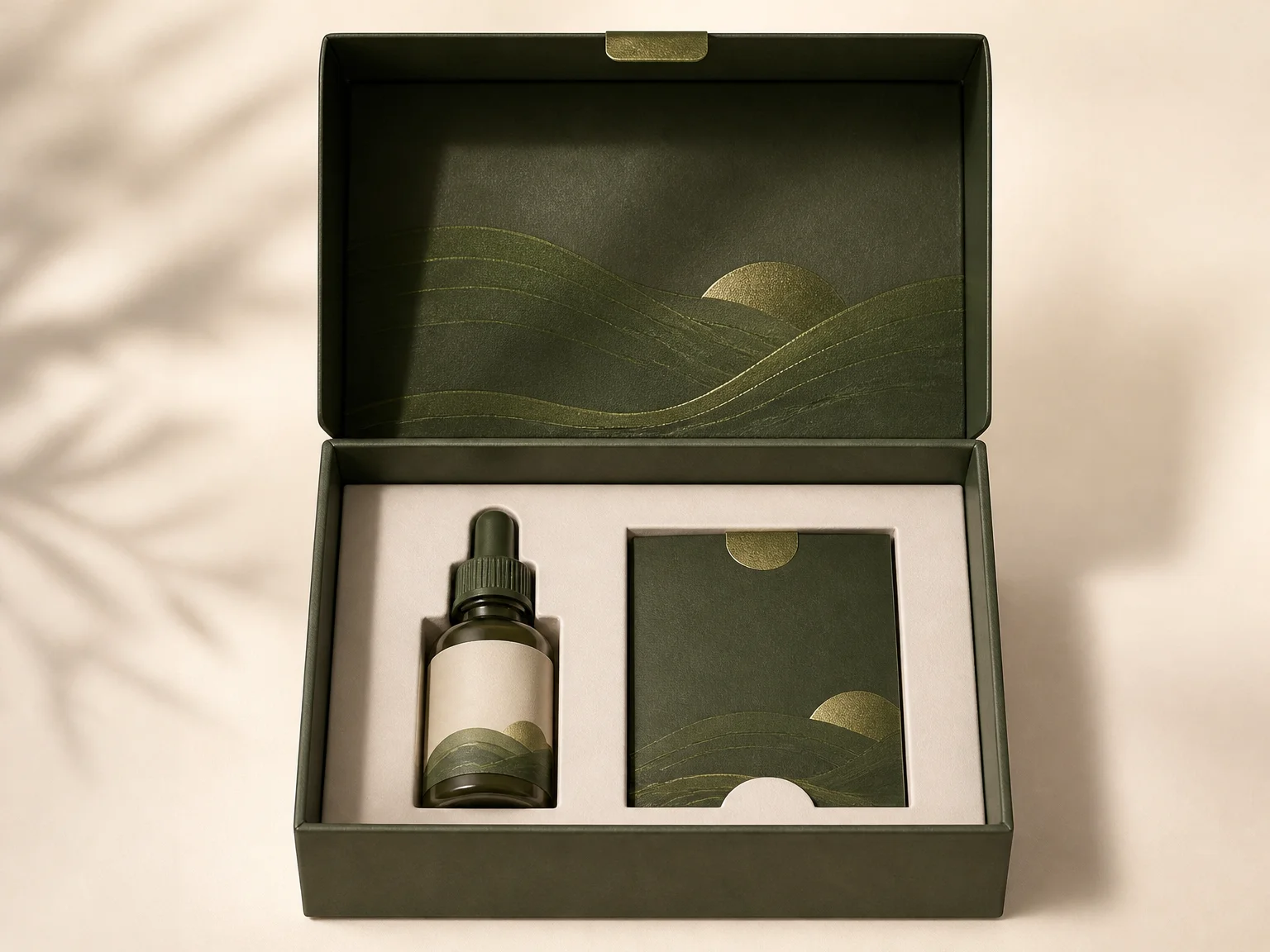
A coordinated gift box can use a restrained finish to make the bottle and brand story feel complete.
5. Decide whether to source boxes and bottles together
When a supplier can coordinate both the perfume box and glass bottle, the design process can begin with better dimensional control. The box can be developed around the final bottle height, cap, collar and weight rather than an assumption that may change later. This can simplify sampling, quality checks and delivery for a new collection.
Separate sourcing may still be appropriate when the bottle is already approved or the brand has a preferred glass supplier. In that case, share the final bottle information early and keep the approved sample as the reference for the box. YiZhou Packaging’s boxes and bottles and fully custom packaging options can be evaluated according to the launch brief.
6. Use sampling to prevent production surprises
A digital rendering helps explain proportions, but it cannot fully show box stiffness, magnetic closure strength, drawer friction, insert pressure, colour reproduction or the way a customer removes the bottle. Request a structural sample with the real product inside. If finishing is a key part of the concept, request a printed sample using the intended stock and surface treatment.
- Confirm bottle data and the target packaging experience.
- Compare structures, materials and insert options.
- Review the dieline and artwork after the dimensions are approved.
- Test the physical sample for fit, movement, opening and removal.
- Check print, foil, embossing and colour under normal viewing light.
- Keep the approved sample as the reference for bulk production and reorders.
For broader manufacturing context, review YiZhou Packaging’s manufacturing and engineering capabilities.
7. Prepare a perfume packaging RFQ that gets a useful quote
A clear RFQ saves time for both the brand and the packaging manufacturer. Include the bottle details, preferred box style, quantity, target market, artwork status, finish direction, insert requirements, shipping destination and expected sample date. Explain whether the priority is premium unboxing, retail efficiency, gift presentation, product protection or a coordinated bottle-and-box system.
If you need several fragrance sizes, list each one separately. The brand system can stay consistent, but the cavity, outer dimensions and board requirements may change. A supplier can then recommend a practical structure instead of pricing an assumed stock format.
Build a Custom Perfume Packaging System
Share your bottle details, box direction, quantity and target market. YiZhou Packaging can help evaluate structures, inserts, finishes and coordinated box-and-bottle options.
Start Your Packaging Discussion →Frequently asked questions
How do I choose custom perfume packaging?
Start with the bottle dimensions, weight, cap, sales channel and brand positioning. Then select a box structure, insert, material and finish that protect the product and support the intended opening experience.
What is the best box for a luxury perfume bottle?
Magnetic rigid boxes, lid-and-base boxes, drawer boxes and premium folding cartons can all work. The best choice depends on the bottle, quantity, target price and desired presentation.
Why is a custom insert important for perfume packaging?
A custom insert reduces movement, protects the glass, supports the cap and neck, and keeps the bottle centred during shipping and opening.
Should I source perfume boxes and bottles together?
Coordinated box-and-bottle sourcing can simplify dimensional control, sampling, quality checks and delivery when the supplier can support both parts of the packaging system.
What should I include in a perfume packaging quote request?
Include bottle drawings or samples, dimensions, quantity, target market, box style, insert requirements, artwork, finishes, packing and shipping details.
Final checklist before ordering
Choose the box around the bottle, not the other way around. Confirm the structure, insert, materials, finish, quantity and shipping requirements before approving artwork. If the package must communicate luxury, make the opening intentional. If it must scale across a product line, make the visual system repeatable. If it must convert an interested buyer into an enquiry, make the next step simple.
For related reading, visit the custom perfume boxes guide, the sustainable perfume packaging guide, or the perfume sample packaging guide.